
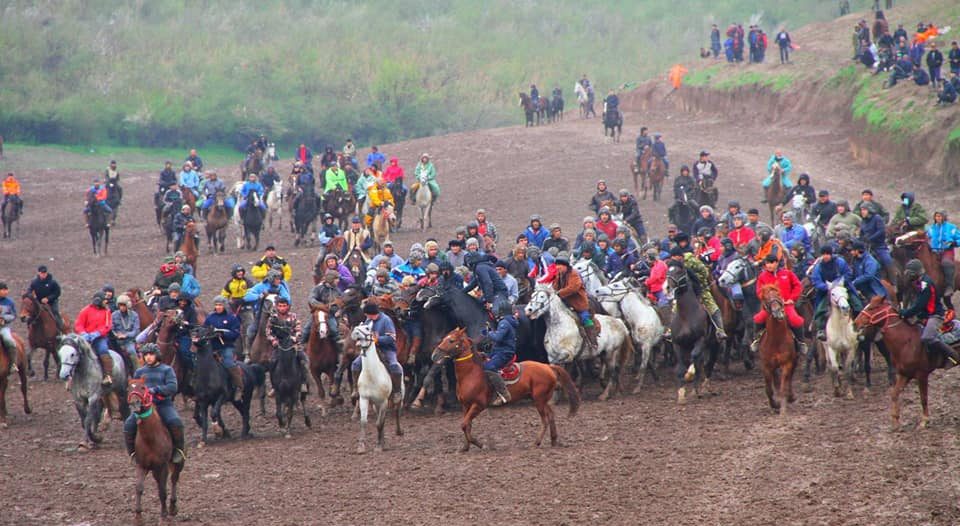
Overview
Kok Boru, also known as Buzkashi (In persian (بزکشی), is a traditional Central Asian game – sport, particularly popular in Kyrgyzstan, Tajikistan, Afghanistan, and some parts of Kazakhstan.
The main goal is to score points by placing a goat (or sheep) carcass in the opponent’s goal.
Here’s a detailed overview:
Kok Boru is known by different names in various countries. Here are a few:
1- Buzkashi – Afghanistan, Tajikistan, and Pakistan.
2- Ulak Tartysh – In Kazakhstan.
3- Kok-Boru – In Kyrgyzstan, where it originated.
4- Kokpar/ Uloq – In Uzbekistan.
Though the rules may vary slightly, the essence of the game remains largely the same across these cultures.
History
– Origins: Dates back to ancient times, possibly over a thousand years ago, as a form of military training and entertainment.
– Historical Significance: The game reflects the nomadic lifestyle and warrior heritage of the Central Asian peoples.
The Game and Its Timed Traditions
Kok Boru doesn’t have a fixed day for its ceremonies as it varies by region and event. However, it is commonly held during:
1- National Holidays: Events like Kyrgyzstan’s Independence Day on August 31.
2- Nomad Games: These are organized every two years, typically in summer. The next one is scheduled for 2024.
3- Local Festivals: These can occur throughout the year, especially during harvest season or cultural celebrations.
For specific dates, it’s best to check local announcements or cultural calendars in areas with us at TravelSerai.
Rules
– Teams: Usually consists of two teams, traditionally comprising 10 to 15 players each.
– Field: Games are played on large, open fields, often spanning several kilometers.
– Equipment: Players ride horses and use their strength and skill to control the carcass.
– Scoring: Teams score by successfully throwing the carcass into a designated area or goal.
Gameplay
– Riders: Players need to have exceptional horseback riding skills, including agility and strength.
– Tactics: Elements of strategy and teamwork are crucial; players often form alliances temporarily.
– Fouls: Illegitimate moves, like hitting opponents violently or foul play, are generally frowned upon.
Cultural Significance
– Festivals: Kok Boru is a highlight during festivals and national holidays, showcasing cultural pride.
– Social Aspect: The sport fosters community and camaraderie, proving vital in social gatherings.
– Symbolism: Represents bravery, athleticism, and the rugged spirit of nomadic life.
Modern-Day
– Recognition: Increased international exposure has led to major tournaments and recognition as part of UNESCO’s intangible cultural heritage.
– Variations: Different forms may exist in various regions, reflecting local customs and adaptations.
Challenges
– Animal Welfare: Concerns about how animals are treated during games have prompted discussions about ethics in sports.
– Preservation: As globalization influences traditional practices, efforts are being made to preserve Kok Boru as a cultural heritage.
At TravelSerai, we can help you plan your visit to coincide with the time of year when this exciting game is held. Apart from enjoying the intensity of Kok Boru, you’ll also have the opportunity to explore other remarkable attractions in the surrounding regions, from breathtaking landscapes to historic sites.
Contact us today to book your personalized tour and immerse yourself in the unique culture and beauty of these regions!”


Comment (0)