
Mount Nemrut: A Monumental Testament to Cultural Fusion
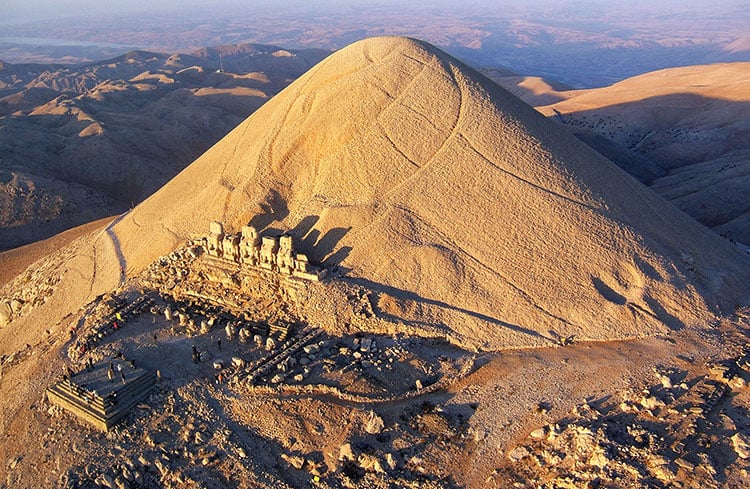
Mount Nemrut (Nemrut Dağı), located in southeastern Turkey near the upper reaches of the Euphrates River, stands as a cultural and archaeological marvel. Situated at an altitude of 2,150 meters within the Taurus Mountains, this UNESCO World Heritage Site is renowned for its monumental sculptures and the sanctuary of King Antiochus I of Commagene. Blending Greek and Persian traditions, Mount Nemrut offers insight into the ancient world’s political, cultural, and religious dynamics.
Mount Nemrut is named after the ancient king Antiochus I of Commagene, who ordered the construction of the monumental statues and tomb-sanctuary on its summit.
The name “Nemrut” is believed to derive from “Nemrud,” which is linked to the local legend and traditions associated with the king. The name itself might be a corruption of the original name, “Nimrod,” a figure in various ancient cultures, often associated with grandeur and power. However, it is important to note that this association is more mythological than historical, and the mountain itself was not named after the biblical Nimrod.
The Orontid Dynasty
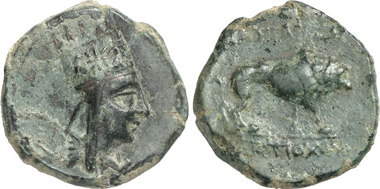
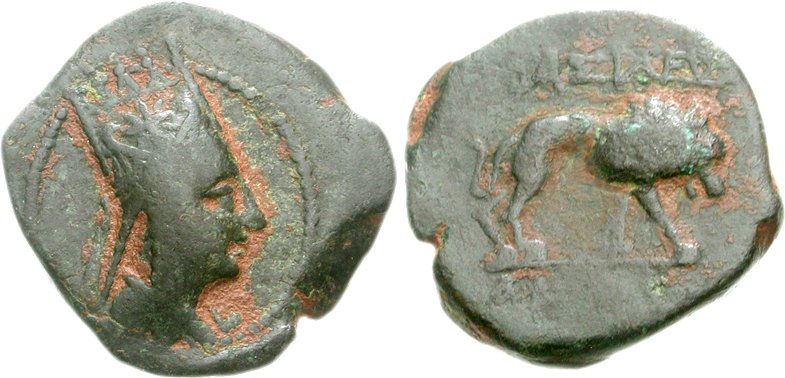
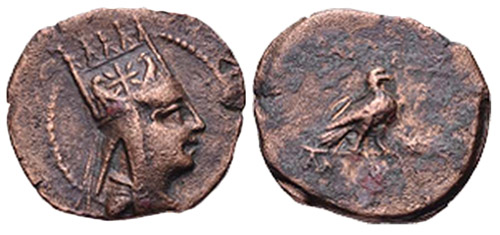
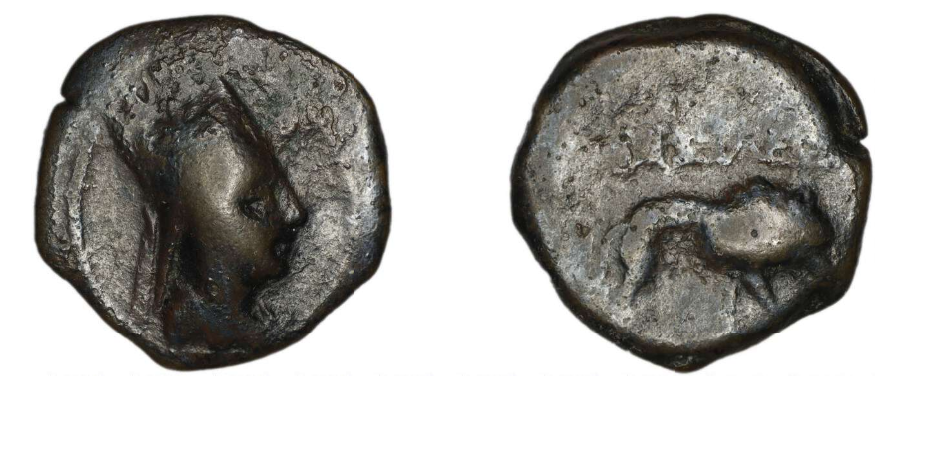
The Orontid Dynasty (6th century BCE–2nd century BCE) was an ancient Armenian royal house that ruled parts of Armenia and nearby regions, blending Persian and local traditions. Its rulers initially served as satraps under the Achaemenid Empire and later asserted independence following the empire’s fall. The last known ruler, Orontes IV, governed as a Seleucid client king until the Seleucid Empire weakened in the 2nd century BCE.
After Orontes IV’s reign, Ptolemaeus of Commagene, linked to the Orontids through lineage or marriage, established the Kingdom of Commagene around 163 BCE. This marked a political and cultural shift, as the new kingdom inherited Persian, Armenian, and Hellenistic influences while asserting its independence.
The Kingdom of Commagene
The Kingdom of Commagene (163 BCE–72 CE) was a culturally significant Hellenistic state located at the crossroads of Anatolia, Syria, and Armenia, blending Greek, Persian, and local traditions. Emerging after the decline of the Seleucid Empire, it became a prosperous hub of trade and diplomacy. The royal family claimed descent from both Alexander the Great and Darius of Persia, reflecting its cultural fusion. After its annexation by Rome, Commagene became part of the province of Syria, marking the end of its unique independent identity.
Antiochus I of Commagene, The King Who Bridged East and West
Antiochus I Theos of Commagene (r. 70–38 BCE) was a Hellenistic king who ruled a culturally significant buffer state in southeastern Anatolia, strategically positioned between the Roman and Parthian Empires. Claiming descent from the Persian Achaemenid kings, including Darius I, and the Seleucid dynasty of Alexander the Great, Antiochus sought to unify Greek and Persian traditions through a royal cult that deified himself and his ancestors.
His most renowned achievement is the monumental sanctuary at Mount Nemrut, featuring colossal statues of Greek and Persian gods, himself, and a unique astronomical calendar. These works symbolized his divine kingship and the fusion of the two cultures. A skilled diplomat, Antiochus preserved Commagene’s independence amidst Roman-Parthian rivalry, leaving a legacy of artistic and cultural innovation that marked a high point in the region’s history.
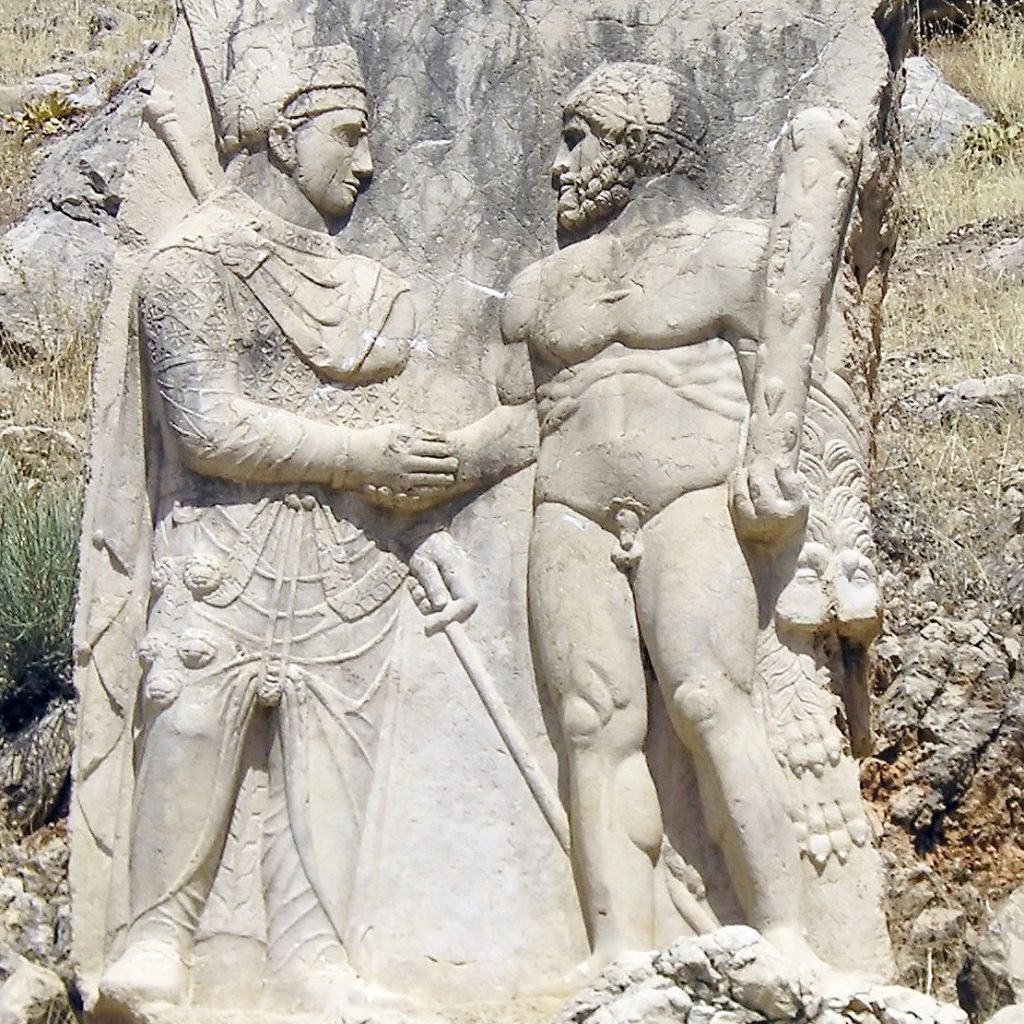
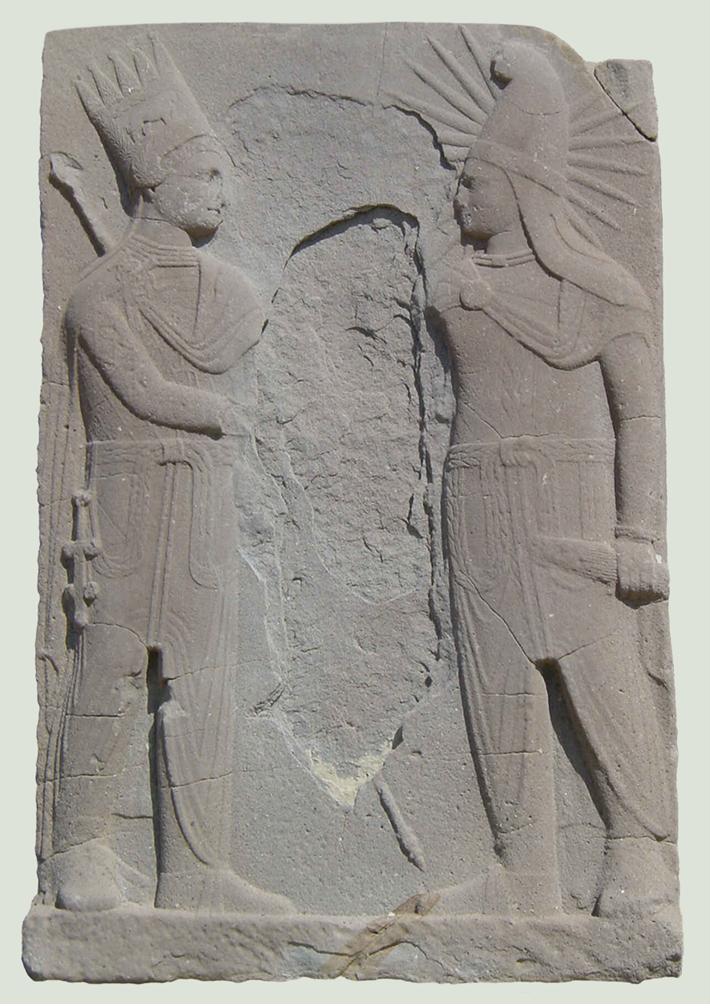
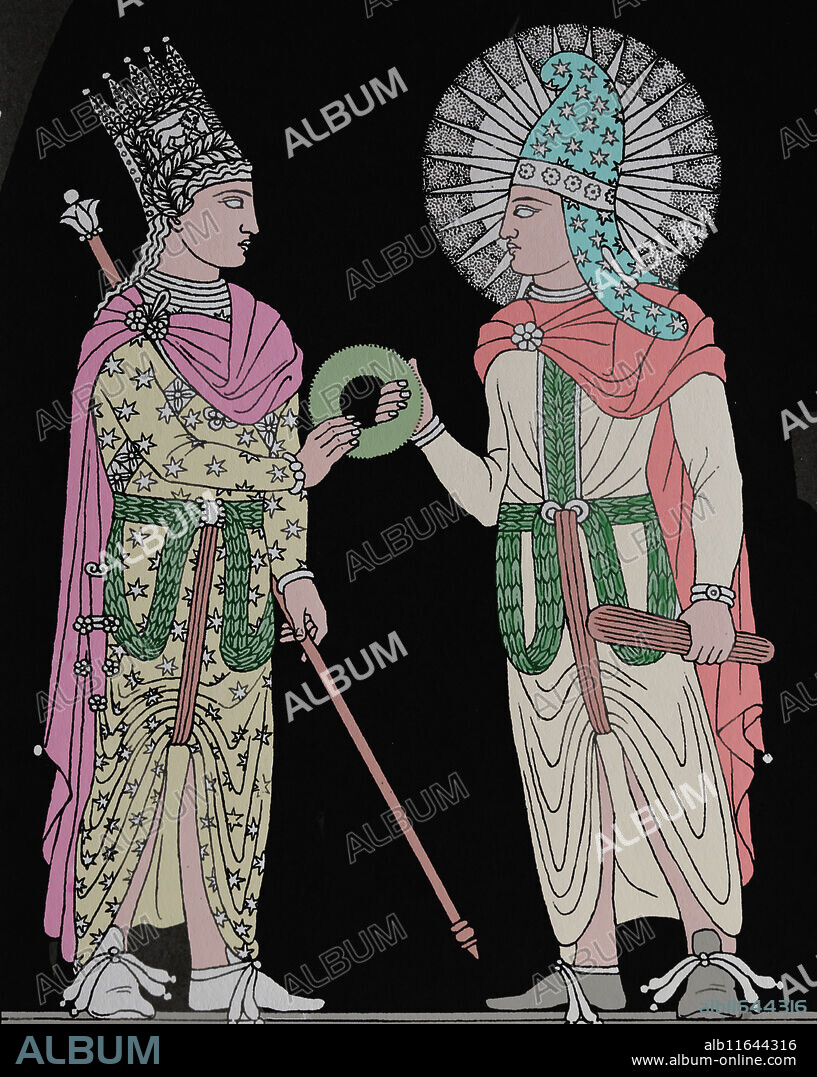
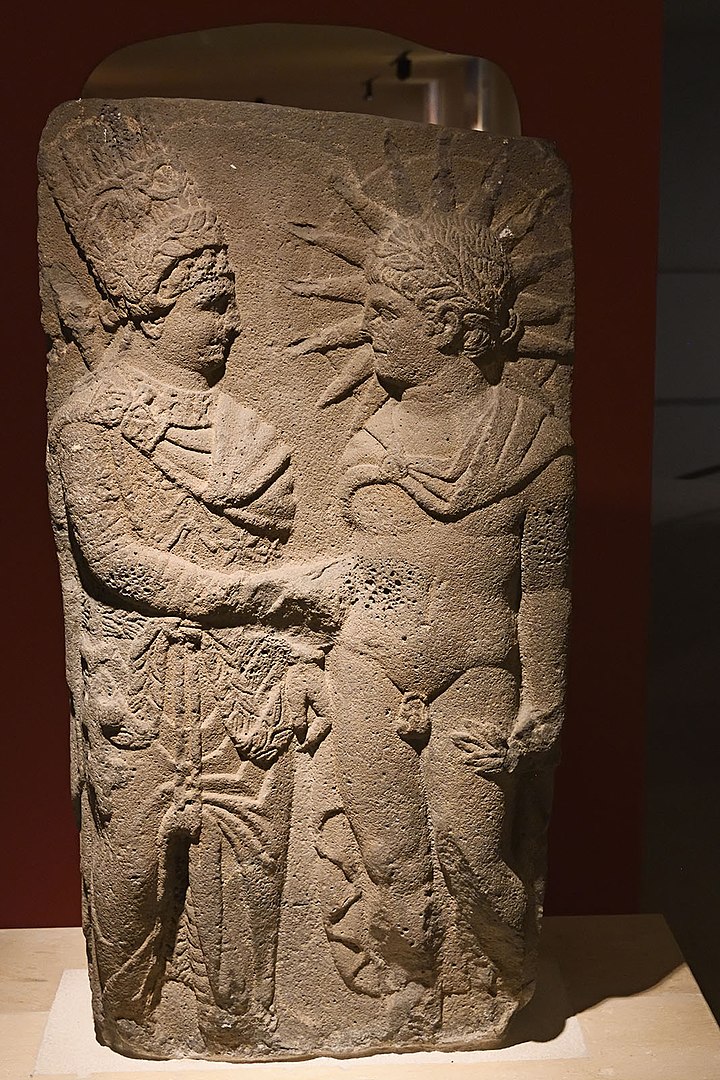
King Mithridates or Antiochus I of Commagene shaking hands with Heracles. (For higher quality, click here.)
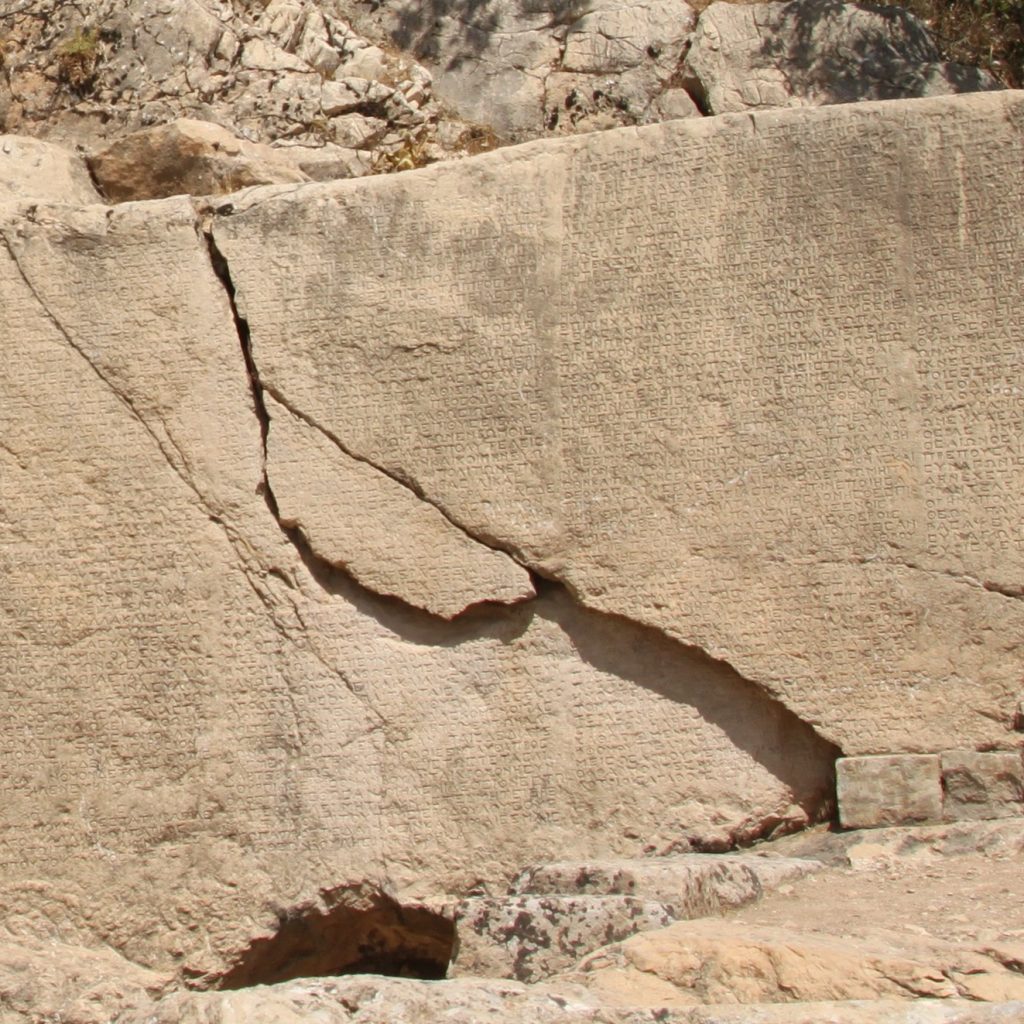
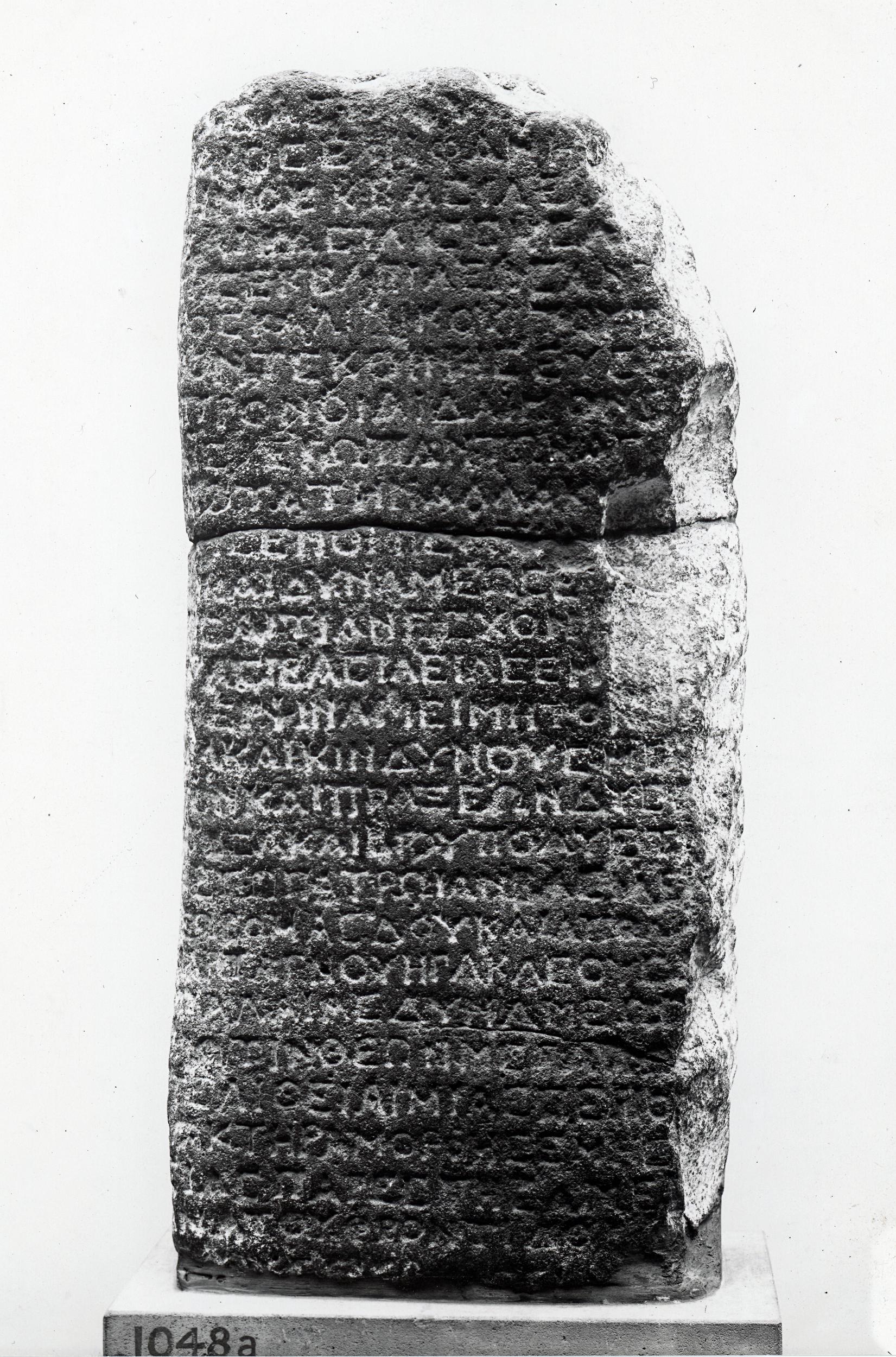
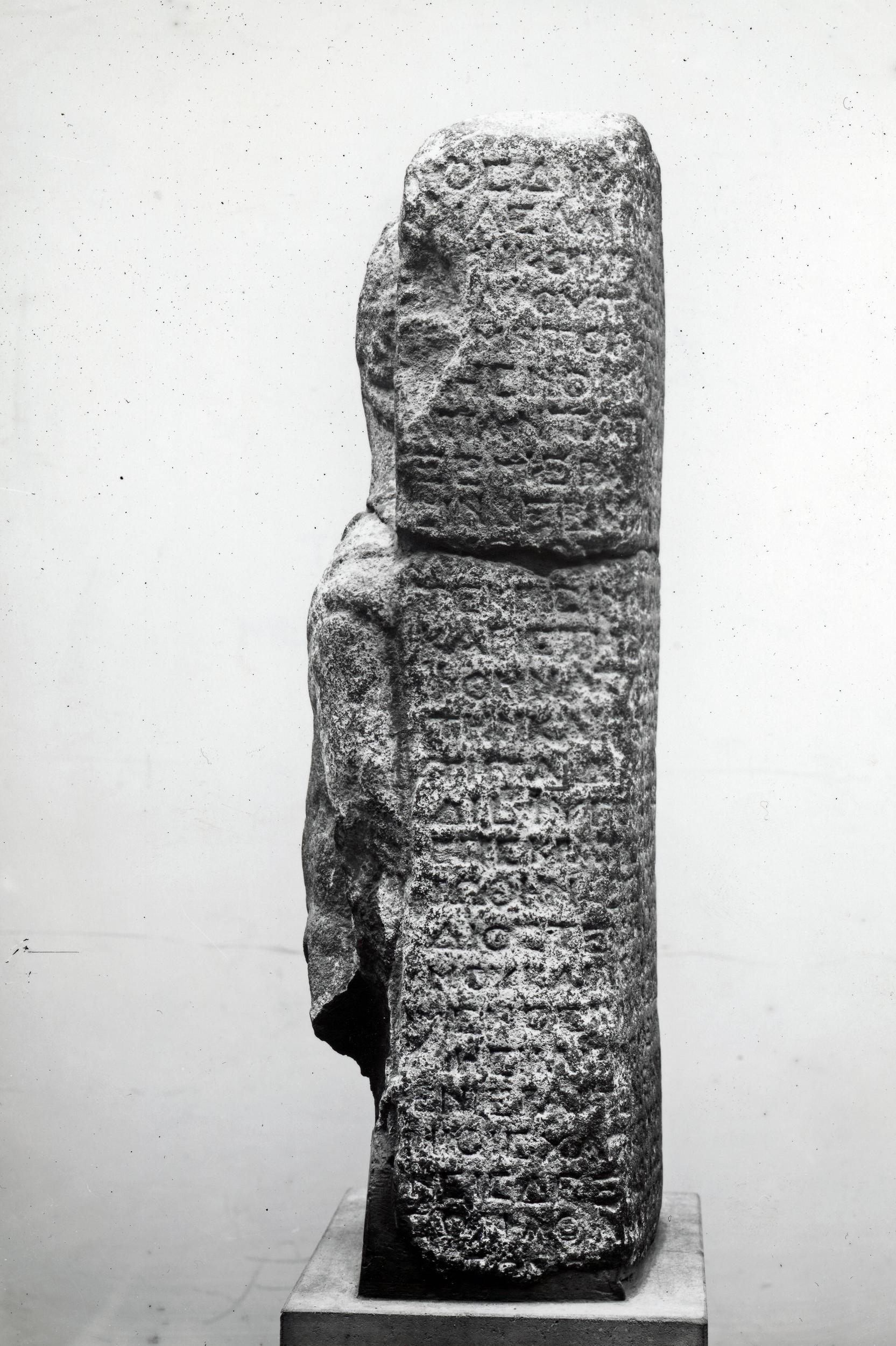
The longest known Greek inscription in Anatolia is in Arsameia, a ruin on the way to Mount Nemrut. (For higher quality, click here.)
Achaemenid and Commagene Royal Family Tree
King of Kings of the Achaemenid Empire, great-great-grandson of Darius I
Satrap of Armenia
Daughter of Artaxerxes II
Prominent Orontid Ruler
First King of Commagene
Strengthened the Kingdom
The son and successor of Sames II
A Greco-syrian Seleucid Princess, a descendant of Alexander the Great through Seleucus. Wife of Mithridates I Callinicus
The son of Mithridates I Callinicus, and Laódice VII Thea. Blended Greek & Persian Rule
King of Commagene
King of Commagene
King of Commagene
Last King of Commagene
Archaeological Features of Mount Nemrut
The Tumulus and Terraces:
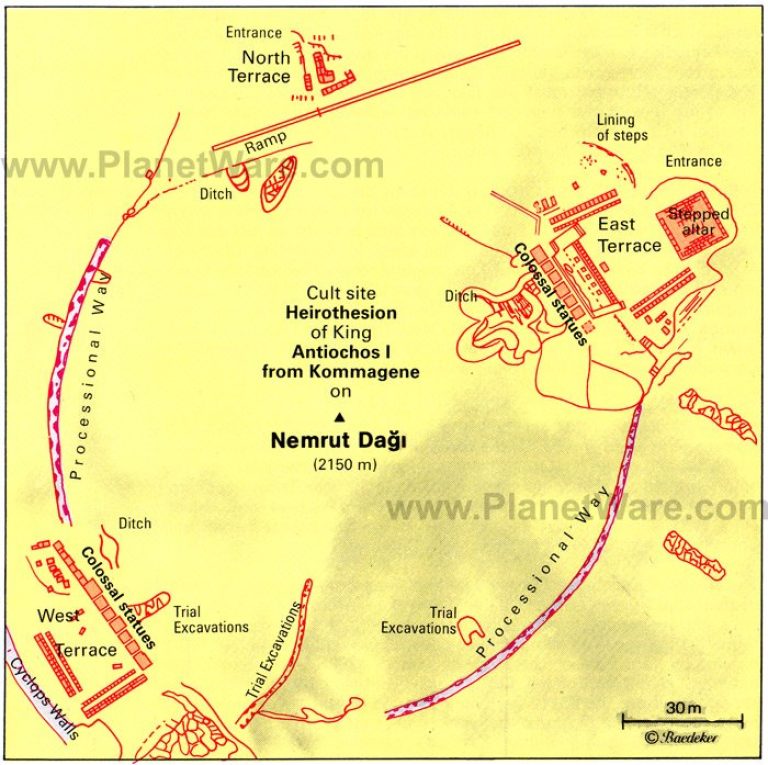
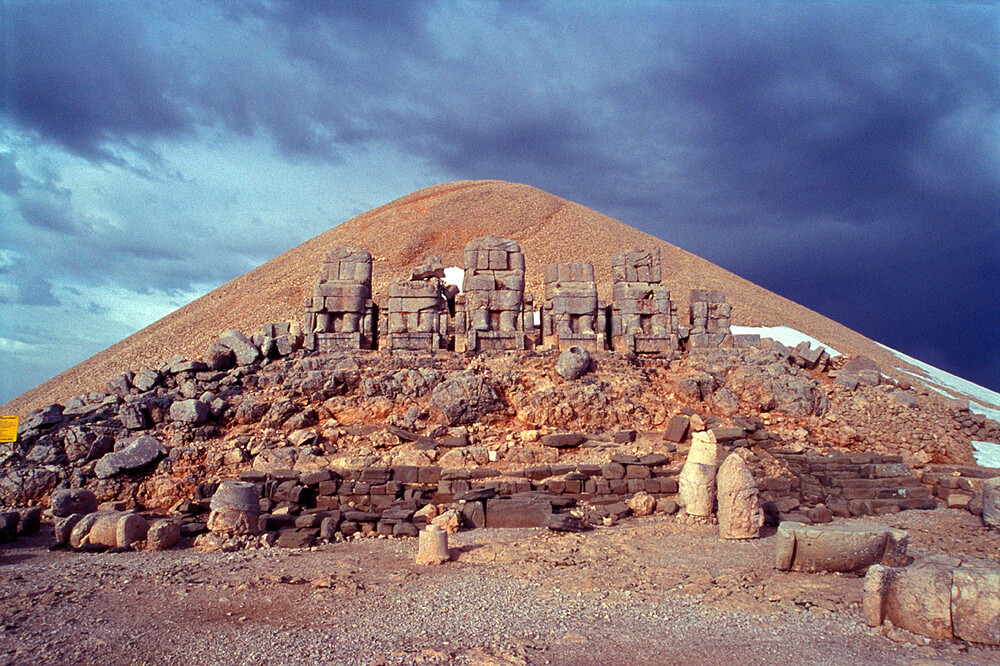
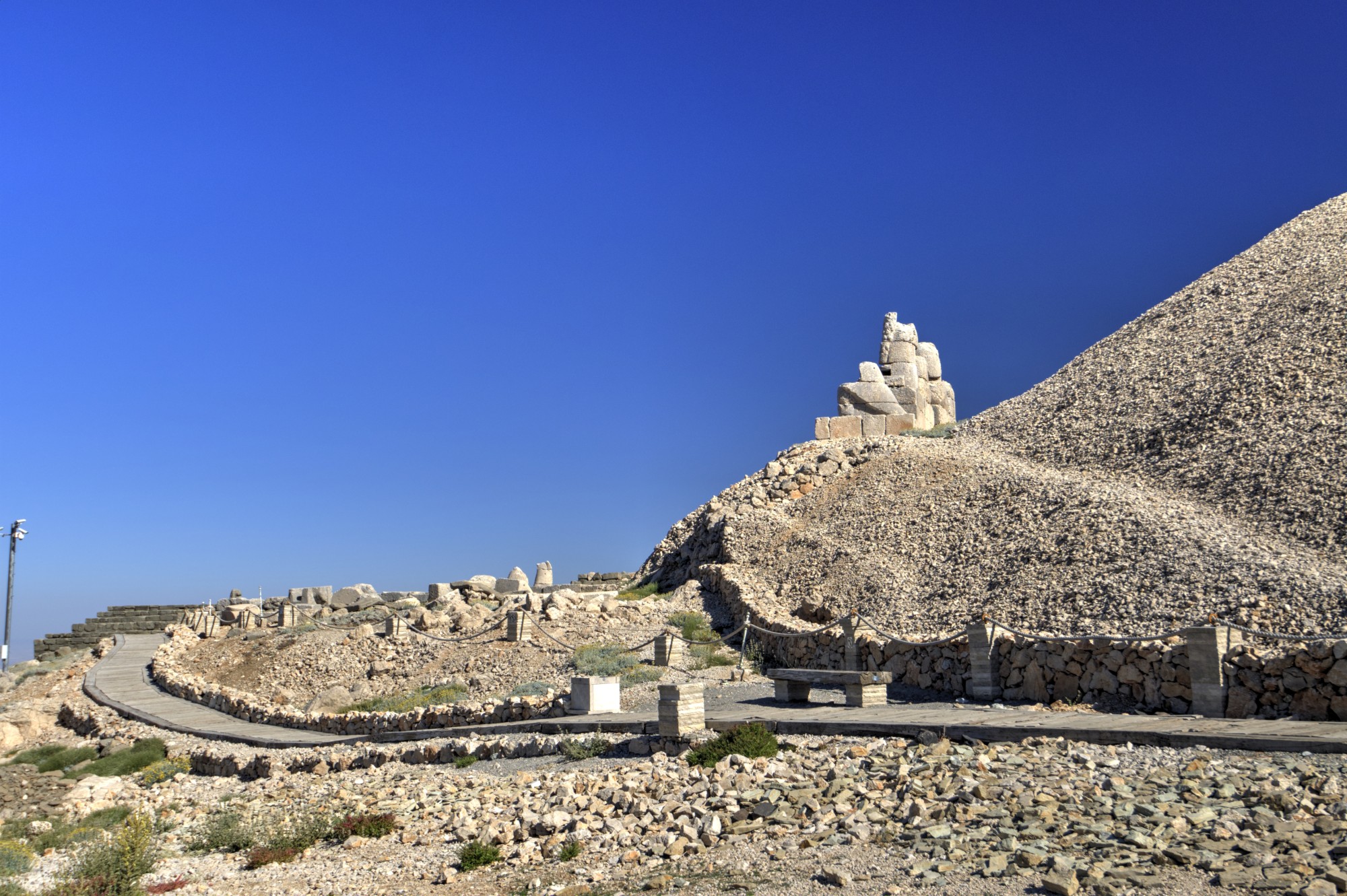
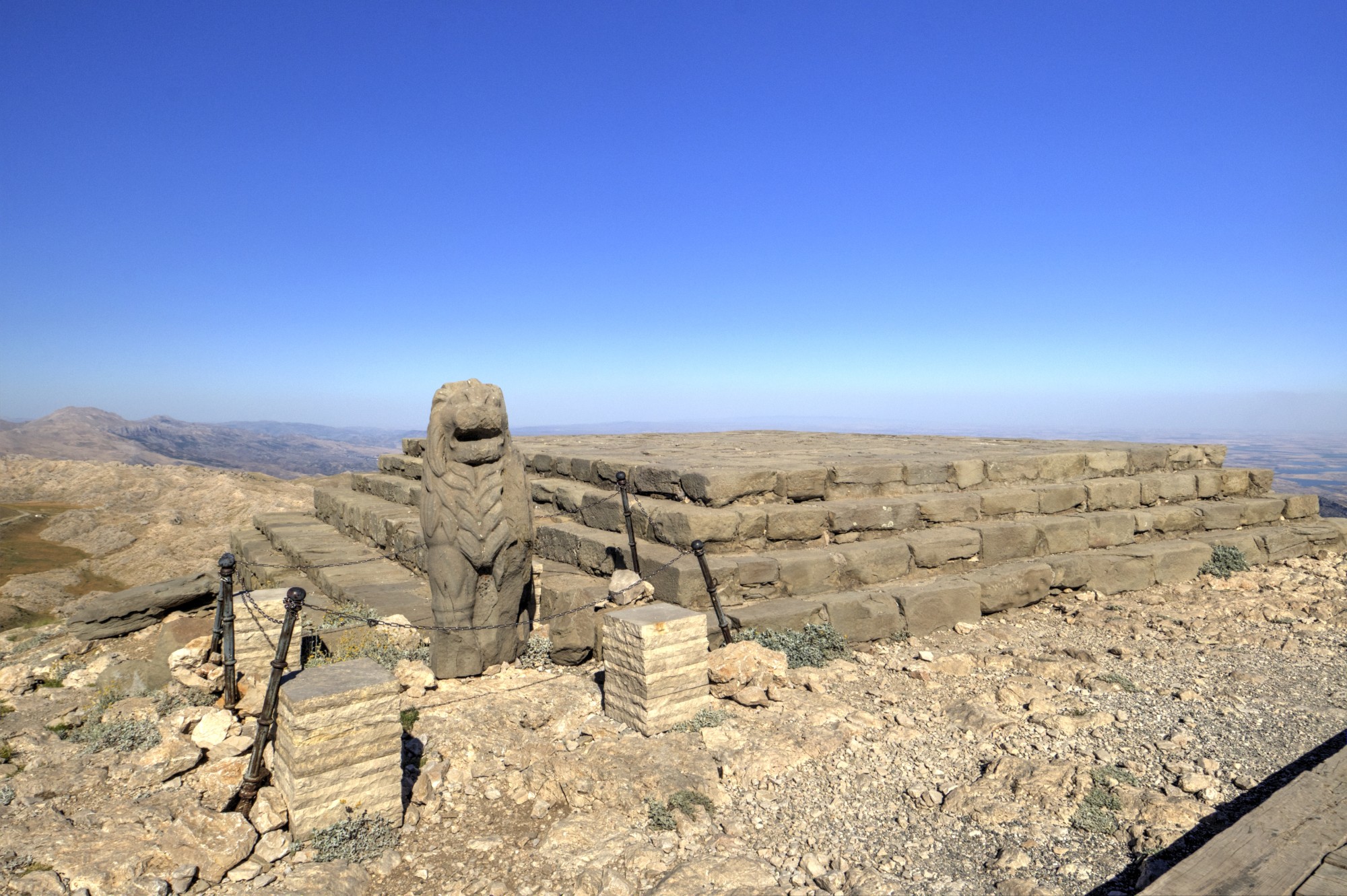
At the summit lies a massive gravel tumulus, approximately 150 meters in diameter and 45 meters high. Surrounding it are three terraces—East, West, and North—each featuring colossal statues, relief steles, and altars.
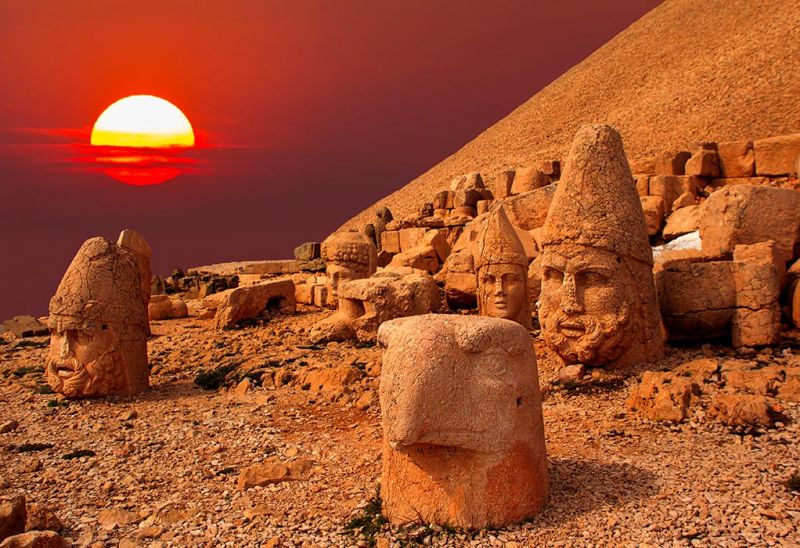
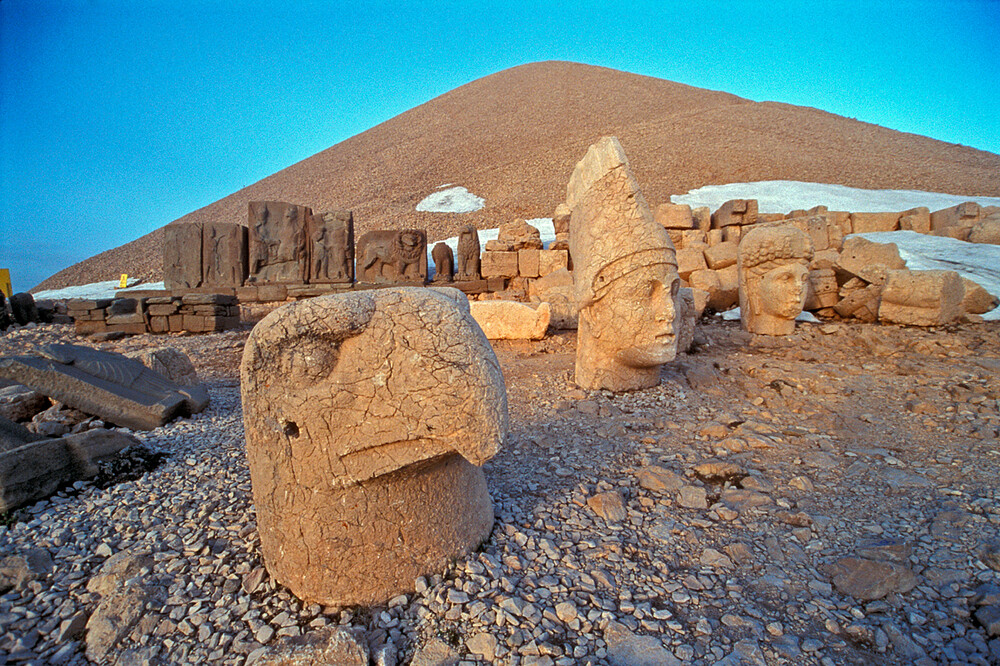
Eastern TerraceThe Eastern Terrace is the largest, measuring 45 by 50 meters. It is the first to be illuminated by the morning sun, making it an ideal spot for sunrise photography. The terrace hosts a row of colossal statues accompanied by guardian lions and eagles, with a fire altar at its center. Visitors often find the view from this terrace particularly captivating in the early morning light.
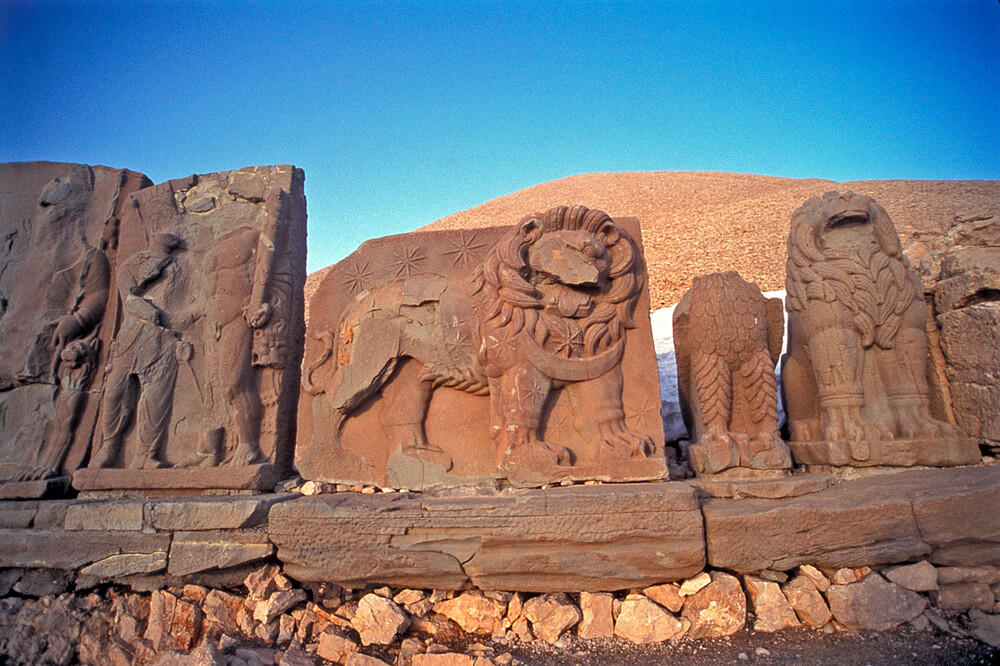
Western TerraceThe Western Terrace offers equally mesmerizing views, especially during sunset. It features statues similar to those on the Eastern Terrace, along with reliefs depicting the king’s ancestors and the famous lion horoscope, considered one of the oldest known horoscopes, dating back to 62 BCE. This relief shows a celestial arrangement of stars and planets, possibly marking the start of the site’s construction.
Northern TerraceThe Northern Terrace, though less adorned, connects the Eastern and Western Terraces. It features sandstone plinths and collapsed stelae, which are believed to have been part of the site’s original design.
Monumental Statues and Reliefs
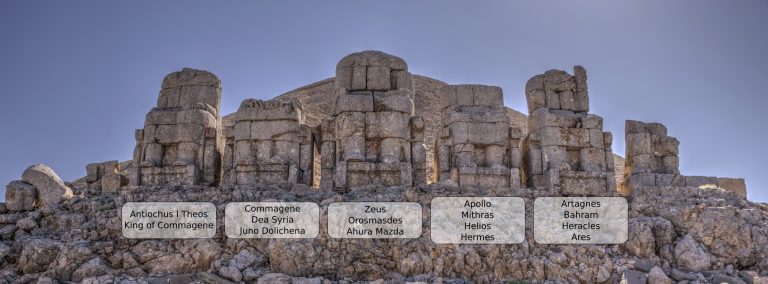
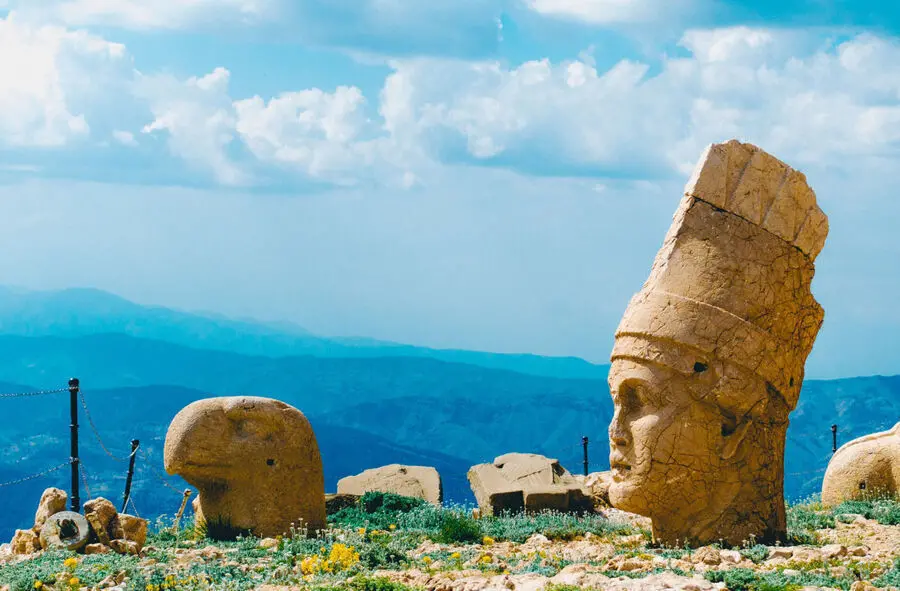
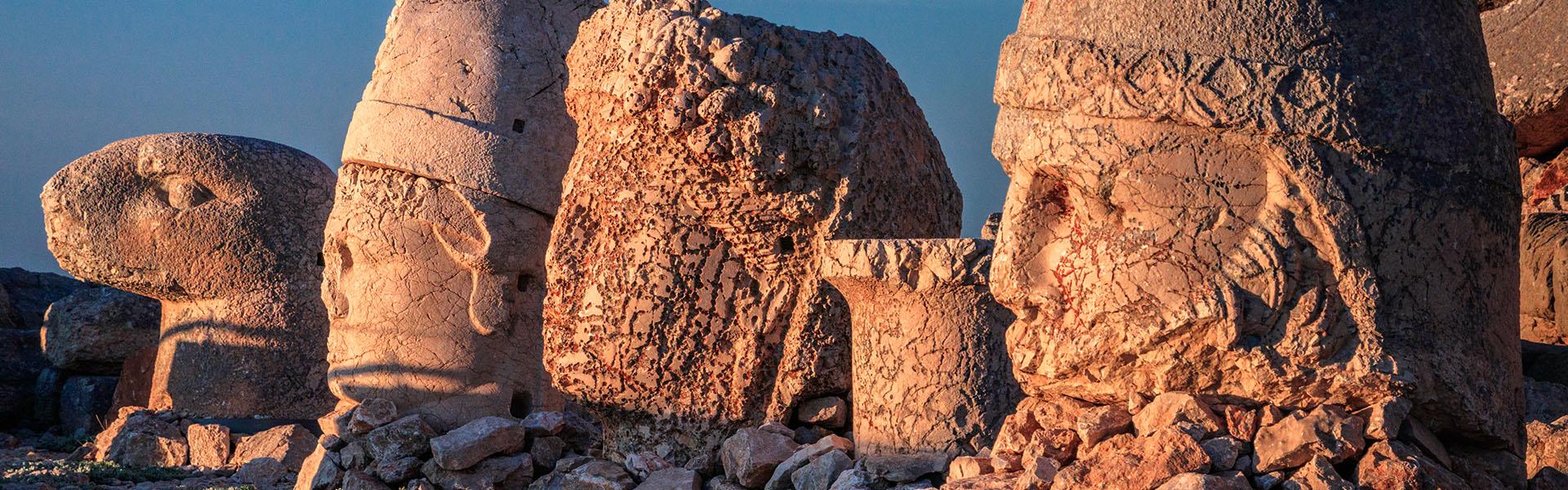
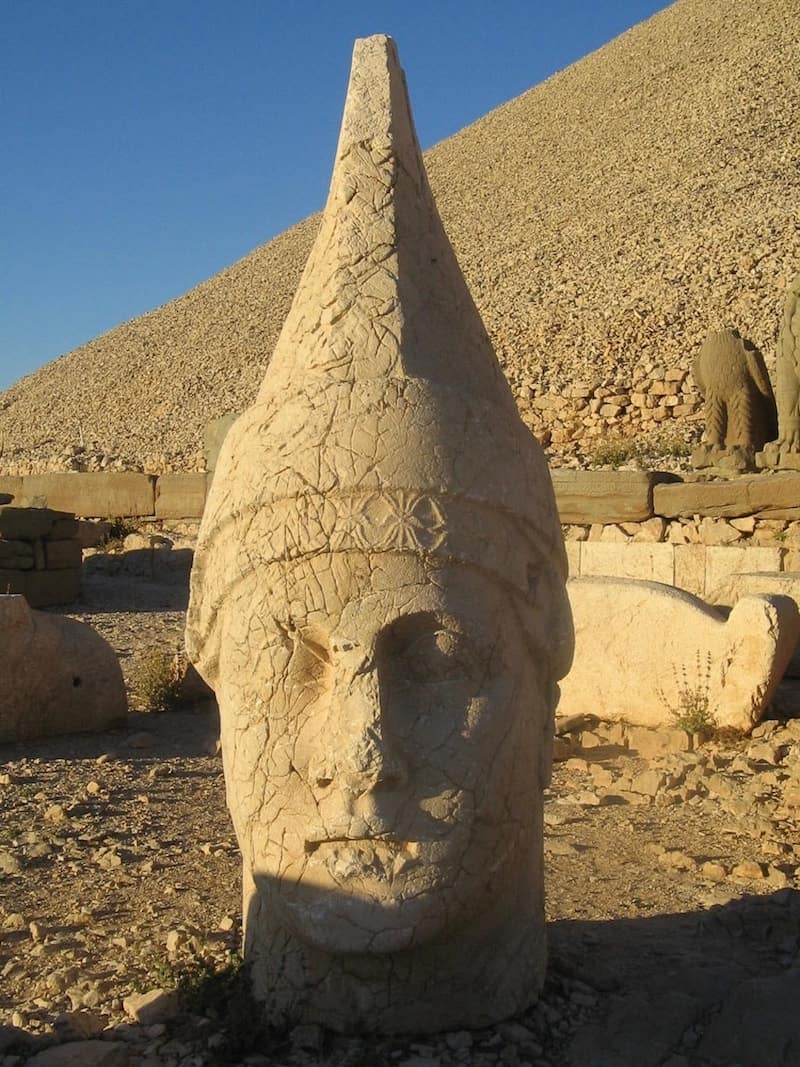
The statues, standing 8–10 meters tall, were constructed in layers using limestone. These include depictions of:
Gods: Zeus-Oromasdes (a blend of Zeus and Ahura Mazda), Apollo-Mithras, and Heracles-Artagnes.
Antiochus: Portrayed as equal to the gods, often shown shaking hands with them in Dexiosis reliefs.
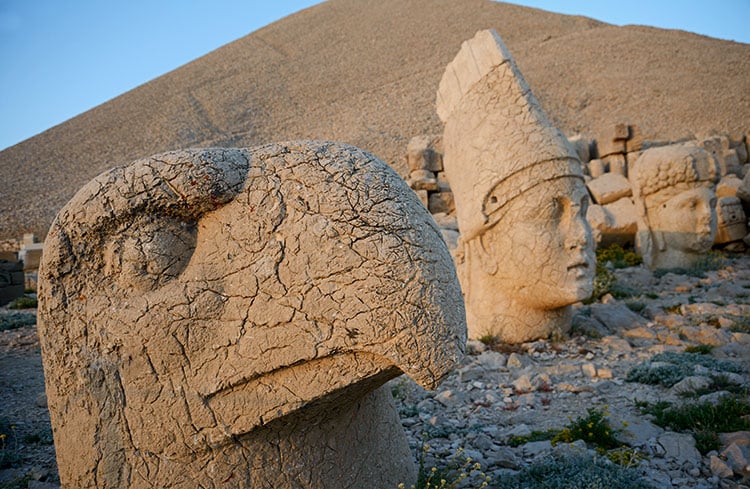
Guardian Animals: Lions and eagles symbolizing power and protection.
The reliefs also include ancestral depictions, celestial motifs like the Lion Horoscope, and ceremonial scenes emphasizing Antiochus’ divine and royal legitimacy.
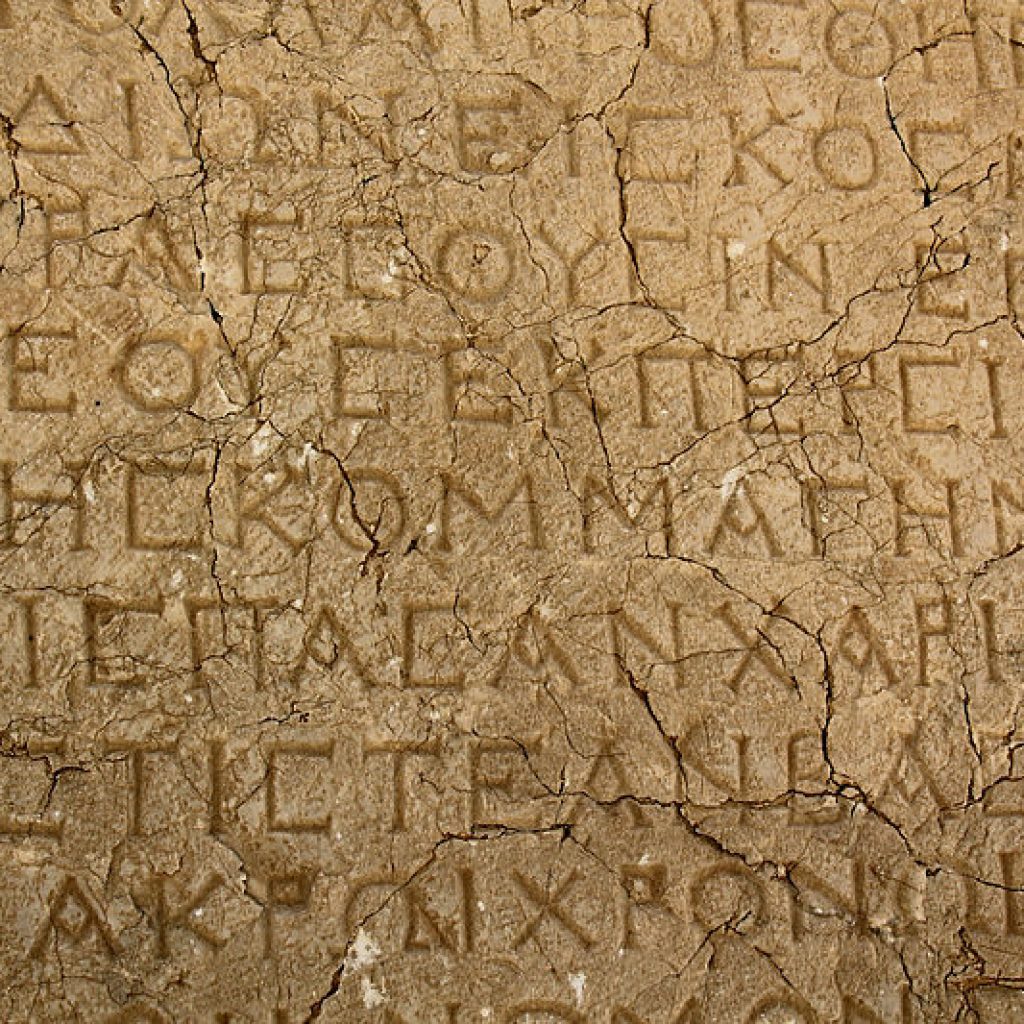
In an inscription, Antiochus first introduces himself with his lineage and all titles and epithets:
“καὶ
Φιλέ[λλ]ην, ὁ ἑκ βασιλέως Μιθραδά-
του Καλλινίκου καὶ βασιλίσσης Λαο-
δίκης θεᾶς Φιλαδέλφου τῆς ἐκ βασι-
λέω[ς] Αντιόχου ᾿Επιφανοῦς Φιλο-
μήτορος Καλλινίκου ἐπὶ καθω-
σιομένων βάσεων ασύλοις
γράμμασιν ἕργα χάριτος ἰδίας εἰς
χρόνον ἀνέργραφεν αἰώνιον”
“The great King Antiochus, God, the Just, Epiphanes, friend of the Romans and the Hellenes, son of King Mithradates Callinicus and Queen Laodice, goddess, the brother-loving, daughter of King Antiochus Epiphanes, the mother-loving, the victorious, recorded on sacred throne bases with imperishable letters words of his own grace – for all eternity.”
Religious and Cultural Significance
The population of Commagene at that time consisted of an Iranian upper class that followed the Persian tradition, but also of a Greek elite that had come to the country during Alexander’s Macedonian conquests. In addition, the country lay in the area of tension between the Roman Empire in the west and the Parthian Empire in the east. Antiochus wanted to unite these two western and eastern cultural movements in the cult surrounding his person and in the art religion that he created for this purpose. To this end, he traced his ancestry on his father’s side back to the Achaemenids up to Xerxes I and Darius I , and on his mother’s side via the Seleucids up to Alexander the Great. On the other hand, he positioned himself as a god in the company of other gods, which he portrayed as syncretic unions of oriental and Hellenistic gods, and added the suffix Theos ( Greek θεός for god ) to his name. Key elements of his cult included:
Zeus-Oromasdes: Supreme god symbolizing divine authority.
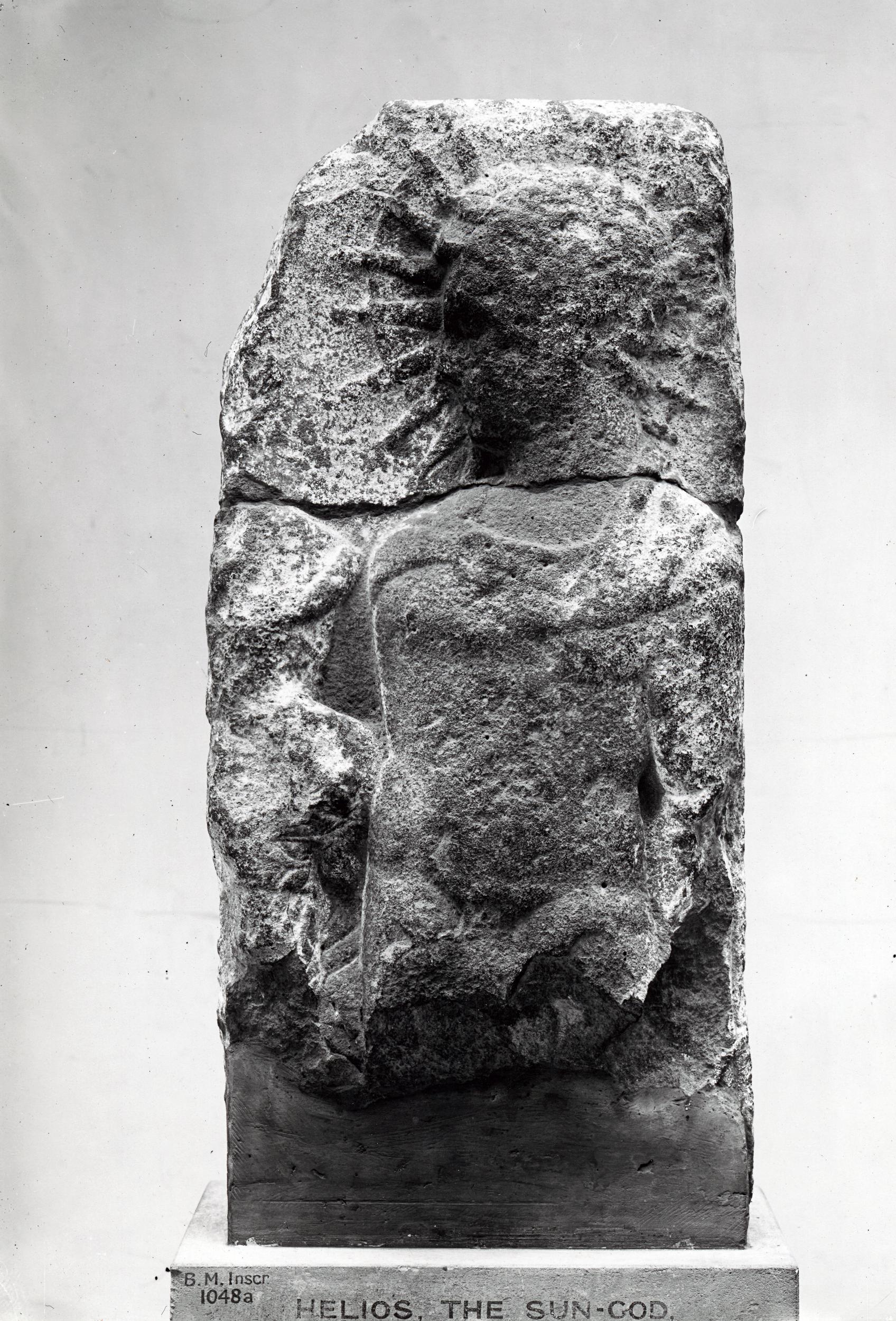
Apollo-Mithras-Helios: Representing wisdom and guidance.
Heracles-Artagnes: A symbol of strength and protection.
Commagene: The goddess of fertility and prosperity.
The Nomos inscription, carved behind the statues, outlines Antiochus’ divine lineage, piety, and instructions for rituals, including offerings, feasts, and musical celebrations.
Ancestral galleries
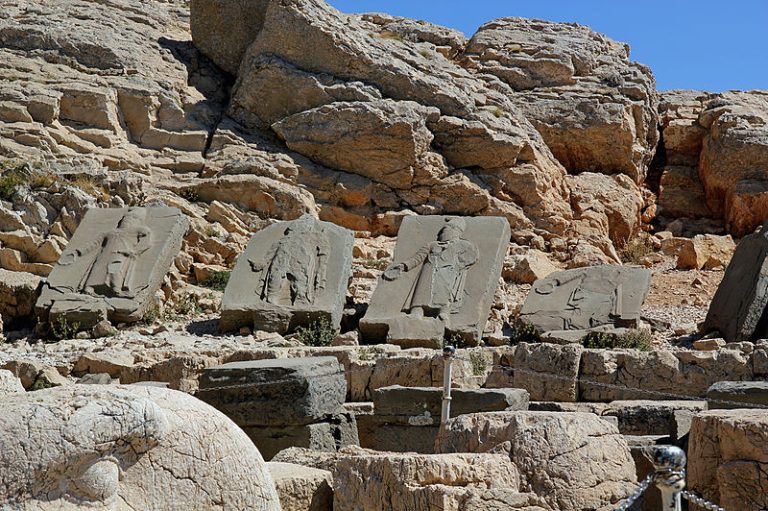
There are two rows of relief steles on both terraces at Mount Nemrut, one of which depicts the paternal, Persian ancestors, and the other the maternal, Seleucid ancestors, of King Antiochus. The Persian ancestors wear traditional Persian attire, while the Seleucid ancestors are dressed in Hellenistic military clothing. The reliefs represent Antiochus’ mixed heritage, blending Persian and Greek influences in their depiction.
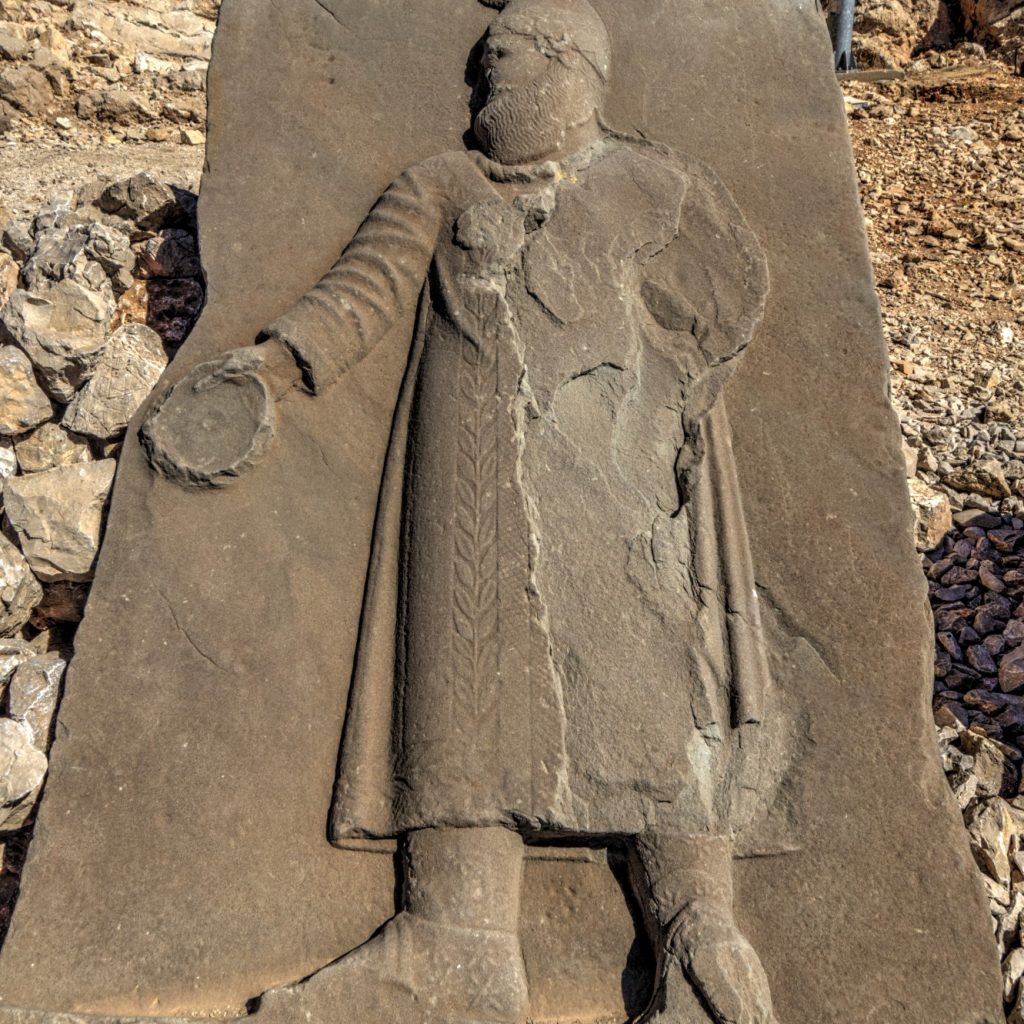
Darius the Great, King of Kings of the Achaemenid Empire
Flora, Fauna, and Landscape
The barren landscape of Mount Nemrut, characterized by sparse vegetation, supports over 250 plant species, including legumes and grasses. The surrounding national park is home to wildlife like bears, wolves, and various bird species, including snowfinches and crested larks. The mountain’s isolation enhances its grandeur, particularly during sunrise and sunset, when its statues appear most striking.
Rediscovery and Research
Early Exploration
Mount Nemrut was rediscovered in 1881 by Karl Sester, a German engineer. Subsequent expeditions by Otto Puchstein and Carl Humann in the late 19th century revealed its historical significance.
Excavations and Studies
Friedrich Karl Dörner and Theresa Goell (1950s-1960s): Conducted extensive excavations and restorations, bringing global attention to the site.
International Nemrut Foundation (1998-2003): Focused on preservation and research.
Despite advanced geophysical surveys, the burial chamber of Antiochus remains undiscovered, adding an air of mystery to the site.
Cultural Reception and Legacy
Declared a UNESCO World Heritage Site in 1987, Mount Nemrut continues to captivate archaeologists, historians, and tourists alike. Its unique blend of cultural and religious elements symbolizes the fusion of Eastern and Western traditions, making it a timeless monument to human ingenuity.
Preservation Challenges
Mount Nemrut’s fragile statues have suffered from earthquakes, storms, and human activities. Many statues are headless, with their heads placed before them. Conservation efforts, including restoration and proposals for a protective museum, aim to preserve its heritage for future generations.
Conclusion
Mount Nemrut stands as a testament to the ambition and vision of King Antiochus I of Commagene. Its monumental sculptures, inscriptions, and syncretic religious ideology offer a window into a unique cultural crossroads. As preservation efforts continue, Mount Nemrut remains an enduring symbol of the ancient world’s complexity and beauty.
Visiting Mount Nemrut: Practical Information and Tips
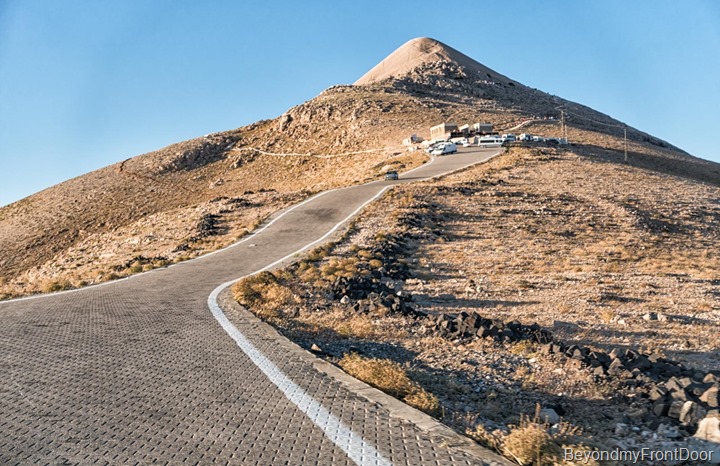
Mount Nemrut is accessible from nearby towns such as Kahta, Adıyaman, and Malatya. Visitors can choose between private cars, organized tours, or shuttle services (Contact us). The journey to the site is an adventure in itself, with scenic routes passing through valleys, ancient Roman bridges like the Septimius Severus Bridge, and other Commagene-era sites such as Karakuş Tumulus, Arsameia, and Yeni Kale.
Best Time to Visit
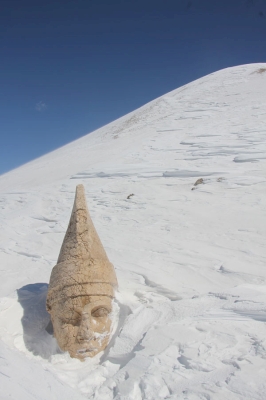
The best times to visit are spring (April-May) and autumn (September-October), when the weather is pleasant, and the terraces offer stunning views of the sunrise and sunset. Winter visits, while unique, can be challenging due to snow blocking the final stretch of the road. For adventurous visitors with proper gear, braving the snow could lead to a one-of-a-kind experience.
For photographers, Mount Nemrut is a dream destination. The pink and reddish hues of the sunrise and sunset provide a dramatic backdrop to the colossal statues, ensuring each photo captures the site’s magic. Additionally, the panoramic views of the Euphrates Valley and the distant Mesopotamian plains make for an unforgettable visual treat.
Let TravelSerai Be Your Guide
If you’re passionate about exploring historical wonders like Mount Nemrut, TravelSerai is your ideal travel companion. We specialize in creating tailor-made tours and providing a seamless travel experience with our expert team and local knowledge.
At TravelSerai, we offer a wide range of services, including:
– Guided tours and personalized itineraries
– Multilingual tour guides (Specializing in English, Spanish, German, Turkish, and Persian)
– Hotel reservations (luxury, boutique, and budget accommodations)
– Visa assistance, air-conditioned transportation, and 24/7 customer support
Whether you’re planning a sunrise hike to Mount Nemrut or visiting the treasures of Asia, Central Asia, or the South Caucasus, we are here to make your journey effortless and unforgettable.
Contact Us
Don’t wait to uncover the mysteries of the past! Contact us today to begin your extraordinary adventure with TravelSerai. Let us create memories that will last a lifetime as you explore the wonders of Turkey and beyond.
Ready for your next journey? Visit us at TravelSerai.com

Comment (0)